Best Crochet Hooks and Yarn for Beginners: Buying Guide
Choose a first crochet hook and yarn with this practical beginner guide to hook size, grip, material, yarn weight, fiber, color, and easy test swatches.

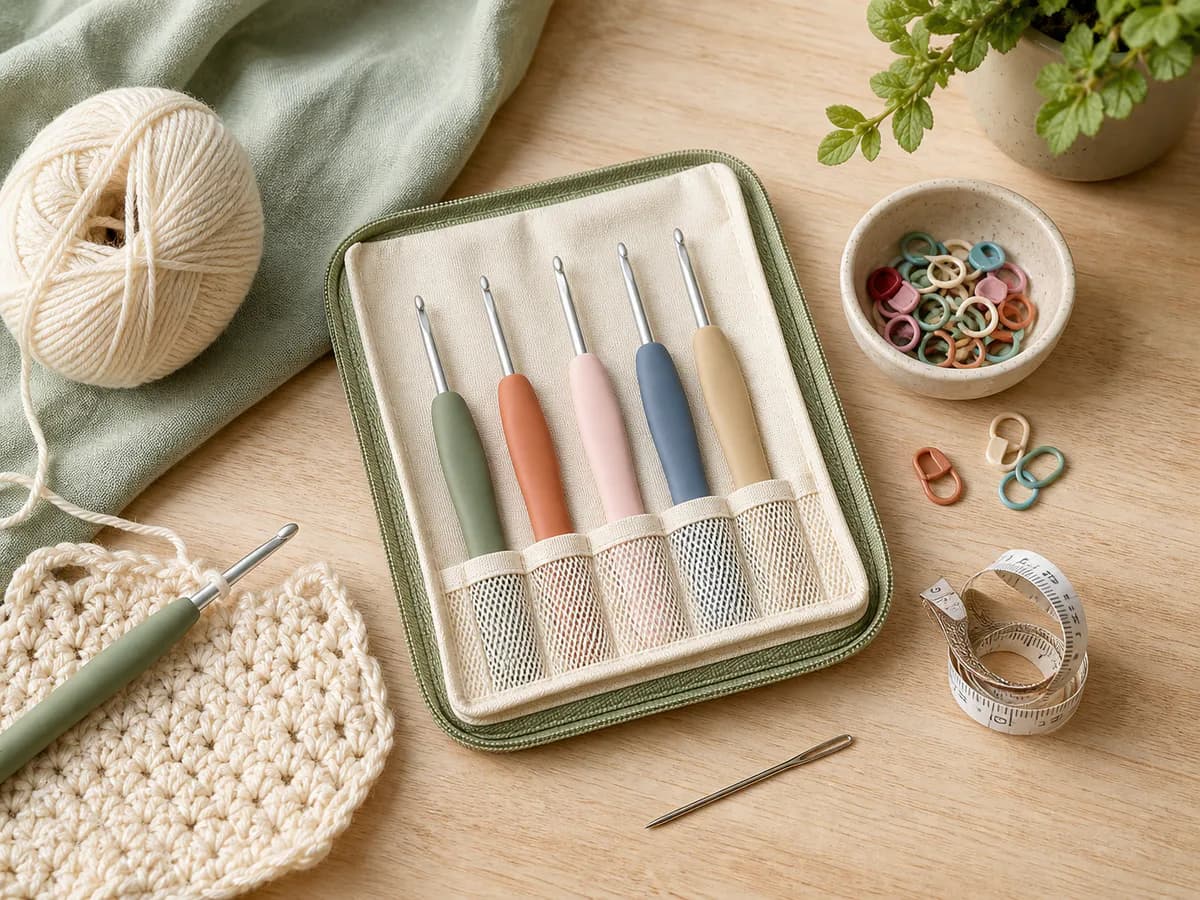
Your first crochet supplies should make stitches easy to see and the hook comfortable to move. You do not need a large matching set to find that combination. Start with one hook, one suitable yarn, and a small practice swatch; add specialist tools when a project calls for them.
This is a guide to choosing materials, not a hands-on ranking of product brands. The right choice depends on your grip, the fabric you want, and the instructions you are following.
Materials and supplies
For an initial practice setup, gather:
- One smooth crochet hook around 5 mm, checked against the yarn label
- One ball of smooth, light-colored medium-weight yarn
- Two locking stitch markers or contrasting yarn loops
- Small scissors, a blunt yarn needle, and a tape measure
You can postpone a full hook set, yarn winder, blocking kit, and decorative accessories. Those can be useful later, but they are not needed to learn chains and single crochet. Buy enough yarn for the actual project when you choose one; a practice ball is not a promise of enough yardage for a bag or garment.
Choose yarn you can see clearly
Look at the strand and the fabric it could make. A solid light or medium color helps you distinguish individual loops. Smooth yarn is easier to inspect than eyelash, heavily textured, or very fuzzy yarn. Dark colors can make stitch placement harder to see in ordinary room lighting.
The number on a yarn-weight symbol describes a thickness category, not the weight of the ball. The Craft Yarn Council standard yarn-weight system places medium yarn in category 4. A label saying 100 g tells you how much the ball weighs; it does not tell you whether that yarn is fine or bulky.
Compare fibers by the job they need to do
| Yarn choice | Useful qualities for practice | What to check |
|---|---|---|
| Smooth acrylic | Often affordable and available in many solid colors | Check whether the strand splits and whether you like the feel |
| Smooth cotton | Clear stitch definition and useful for many home projects | Less elastic fabric can feel firmer to work; keep your grip relaxed |
| Wool or a wool blend | Elasticity can suit some practice and garment work | Check fiber sensitivity, washing instructions, and fuzziness |
| Chenille, eyelash, or novelty yarn | Creates a distinctive finished texture | Hidden loops can make counting and correcting a first swatch harder |
Fiber alone does not determine quality. Two cotton yarns can differ in twist, thickness, and softness. If the strand separates when you handle it, check how easily the hook catches all its plies before committing to several balls.
Read the yarn label before buying
Use the label to answer these questions:
- What is the fiber content? This helps you judge care and suitability for the intended use.
- What is the thickness category? Match the pattern's yarn category as a starting point, then check gauge.
- How many meters or yards are in the ball? Compare length, not just the number of balls, when substituting yarn.
- What hook range is suggested? Treat it as a starting range; the pattern and your swatch determine the final choice.
- How should it be washed and dried? Choose care instructions you can realistically follow.
- Is there a dye lot? For a larger single-color project, matching lots can reduce visible color differences.
For example, a hypothetical 200 m ball and a 100 m ball contain different amounts of usable length even if both are sold as one ball. If a pattern requires 400 m, the basic calculation is two of the first or four of the second, before any extra allowance for your own tension or changes. This example is arithmetic, not a yarn estimate for a specific pattern.
Choose one crochet hook before buying a set
The millimeter marking is the clearest way to identify the intended size. Letter and number labels can vary, so use the millimeter size when comparing tools. A 5 mm hook is a reasonable practice starting point for many medium yarns, but check the yarn label and do not force thick yarn through a hook that feels too small.
If a pattern gives you an unfamiliar letter or calls for a different style of tool, use our crochet hook sizes and types guide to compare metric sizes, regular and steel hooks, Tunisian hooks, and gauge decisions.
Compare material and handle separately
| Hook feature | What to notice during a short test |
|---|---|
| Metal hook | Does the yarn slide easily, and is the surface free from rough spots? |
| Wood or bamboo hook | Does the added grip feel controlled, or does the yarn catch? |
| Plastic hook | Is the shaft smooth and firm enough for your working tension? |
| Ergonomic handle | Does its shape suit your hand without forcing your fingers apart? |
| Plain handle | Can you hold it comfortably without squeezing or slipping? |
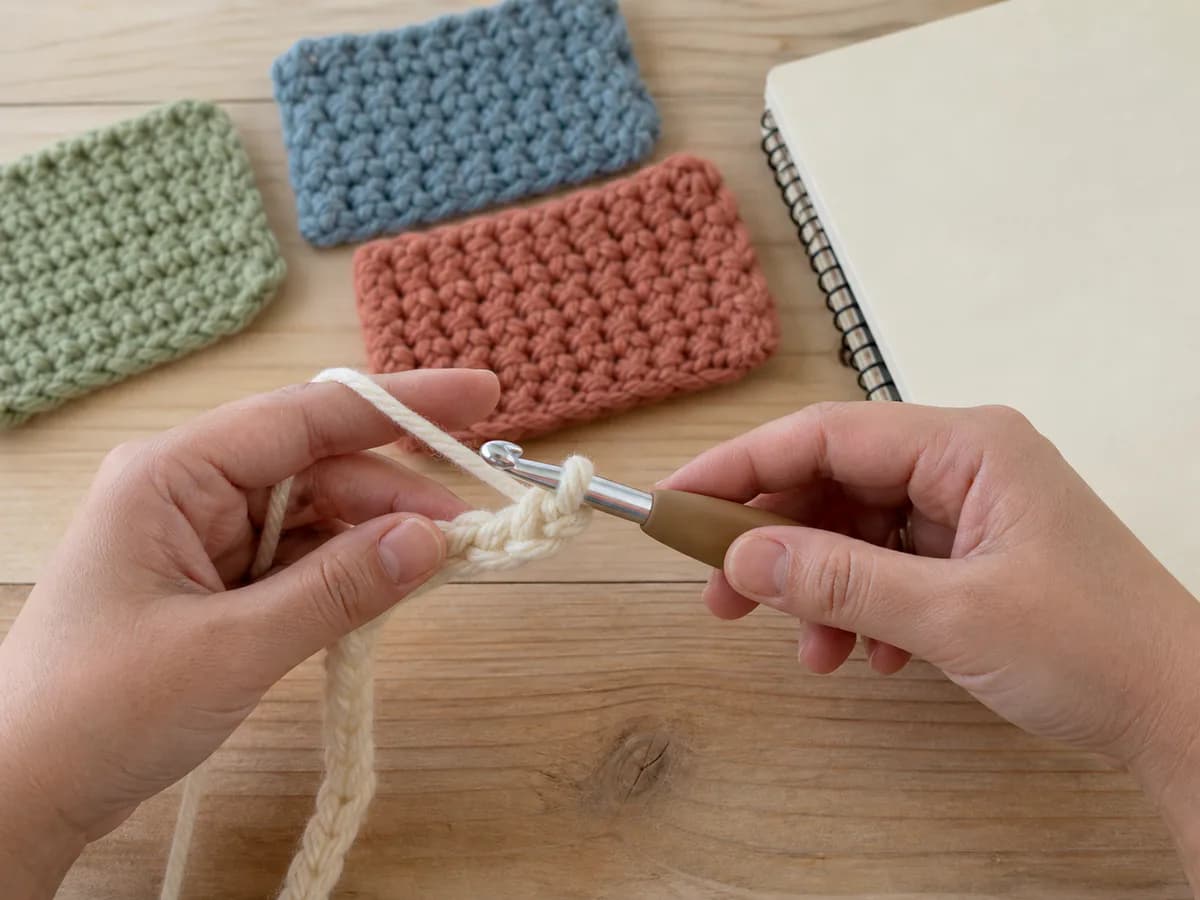
An ergonomic handle is an option, not a guarantee of comfort. Try the pencil hold and the knife hold with a relaxed hand; either can work. Notice whether the handle leaves enough shaft exposed for the loops of the stitch you are making. A larger collection does not solve an uncomfortable grip on its own.
Make a small test swatch
If a shop permits a sample test, ask first. Otherwise try this at home before opening more yarn or buying adjacent hook sizes. You need to know chains and single crochet; the absolute beginner tutorial explains those movements.
- Chain 21, leaving the loops loose enough to insert the hook.
- Sc in the second chain from the hook and each remaining chain: 20 sc.
- Ch 1 and turn; the turning chain does not count. Sc in every stitch: 20 sc.
- Repeat step 3 for several rows and mark both edge stitches.
- Check whether the hook enters without force, whether the strand splits, and whether you can identify the top loops and count 20 stitches.
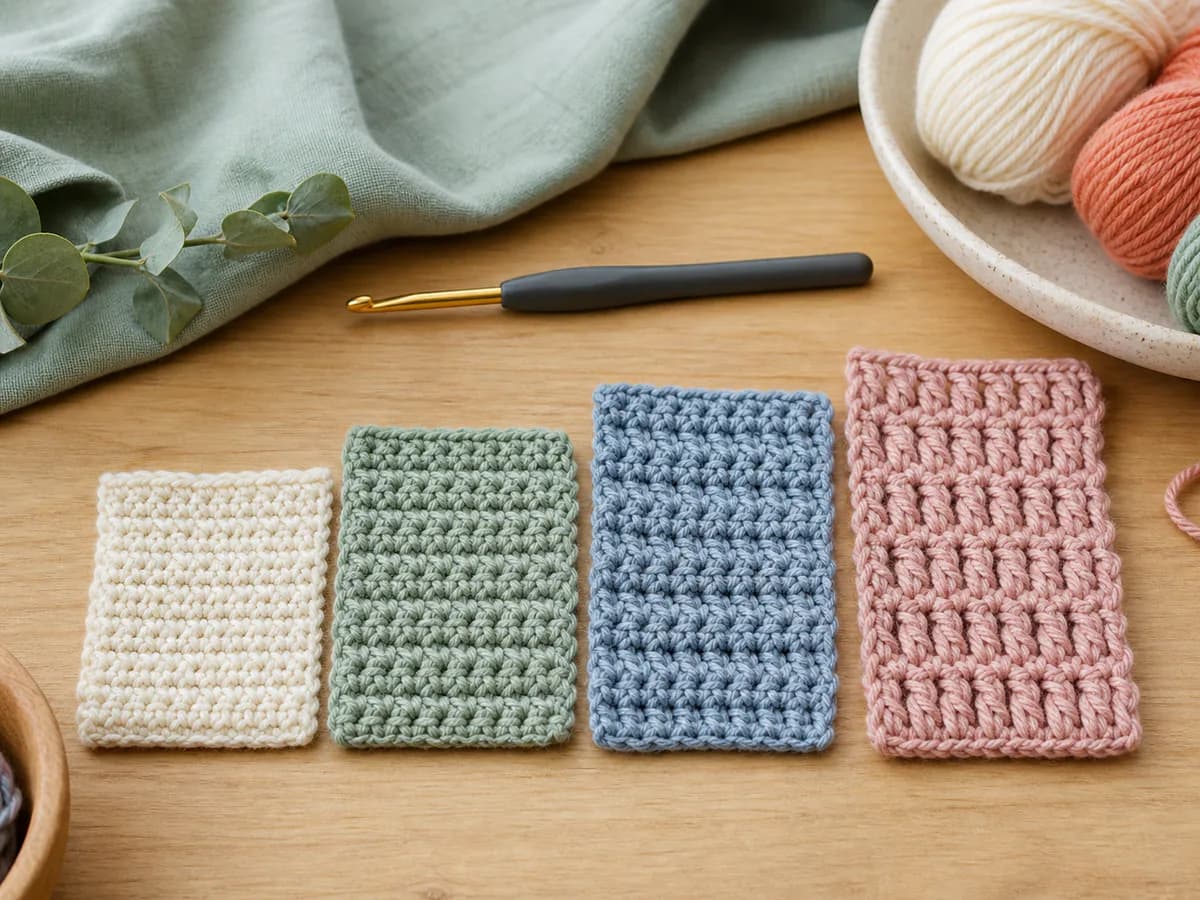
This is a handling test, not a gauge swatch for a fitted garment. For a pattern with specified gauge, make a larger swatch in its stated stitch, wash and dry as directed, and measure away from the edges. Do not use the small exercise to promise a finished size.
Tips & troubleshooting
The hook catches the yarn repeatedly
Check for a split stitch, a rough surface, or an insertion angle that catches only one ply. Remake the stitch and try again before changing tools. If the same yarn repeatedly separates with careful insertion, a more firmly twisted practice yarn may be easier to handle.
The chain is tight but later rows feel comfortable
Keep the working hook and try making the foundation with a slightly larger hook. Then compare another short sample. Changing the hook for every row would also change the fabric, so isolate the foundation issue first.
The fabric feels too stiff or too loose
Check the intended use. A soft scarf and a dense stuffed piece do not need the same fabric. For learning, aim for loops you can enter and count comfortably. When following a pattern, its gauge and fabric requirements take priority over how the practice square feels.
Frequently Asked Questions
Is cotton or acrylic better for a beginner?
Either can work. Smoothness, visible color, and how the yarn handles matter alongside fiber. Try acrylic if you want an often economical practice option; consider cotton when clear stitch definition and a suitable home project are your priorities.
Do I need expensive hooks?
You need a smooth hook of the right size that feels comfortable in your hand. Price and the number of hooks in a set do not establish that. Start with one and assess it through the short swatch exercise.
Can I use yarn I already own?
Yes, if you can see the stitches and have a suitable hook. Keep its label if available. An unlabelled scrap can still help with practice, but it is harder to plan care, yardage, or a matching replacement for a larger project.
When should I buy more hook sizes?
Add a size when your next pattern requires it or when a measured swatch shows you need an adjustment. Keep notes on the hook and yarn combination so you can return to it later.
Keep exploring
If you would rather start with a complete project box, compare crochet kits for beginners by project type, included tools, and teaching format. Work through common crochet mistakes and their fixes if the practice swatch changes width. Learn the motions in the basic stitch guide, or use the garment sizing guide when a future project needs measured fit.
Essential crochet guides
Maker notes
Questions or finished-project notes?
Share what helped, ask about a step, or leave a thoughtful note for the next maker.
Loading maker notes...