How to Size a Crochet Garment: Complete Guide
Size a crochet garment from a washed gauge swatch using finished measurements, ease, stitch multiples, row gauge, and a practical calculation worksheet.

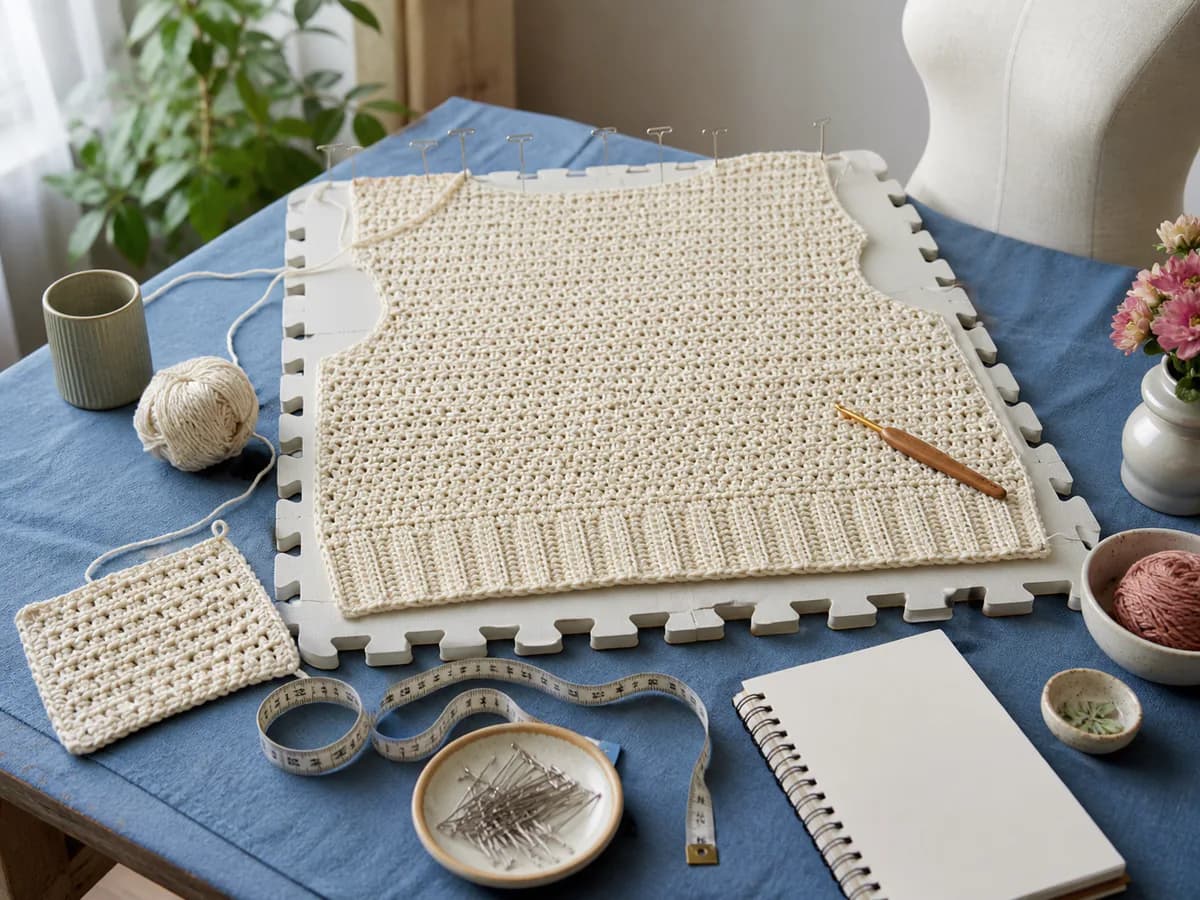
A wearable fits when the finished fabric measurements, not the label on a pattern, match the body and the intended amount of ease. The reliable process is: measure a garment you already like, wash a generous swatch, calculate stitch and row counts, then check the work at several points before seaming.
Core formula: required stitches = target width in cm × stitches per cm. Round that result to the nearest number allowed by the stitch pattern.
Tools and measurements
- The exact yarn and hook planned for the garment
- Flexible tape measure, pins, and calculator
- A well-fitting garment with similar fabric and shape
- A washed swatch at least 15 × 15 cm
- Notebook for stitch, row, and finished measurements
Measure chest or bust, upper arm, body length, shoulder width, and sleeve length. For a drop-shoulder garment, also record the desired garment width and the distance from shoulder to cuff. Measure over the clothing normally worn underneath.
Choose ease before choosing a size
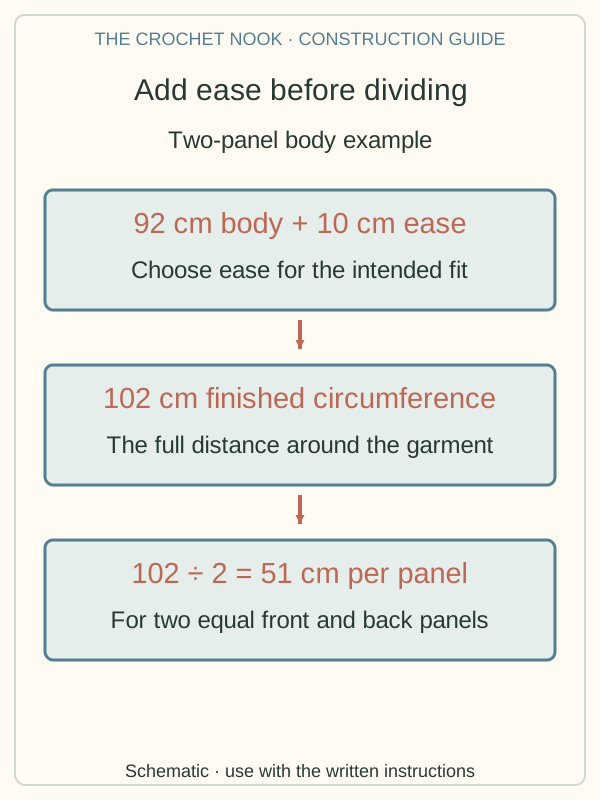
Ease is the difference between body measurement and finished garment measurement.
| Intended fit | Typical ease at chest |
|---|---|
| Close fit | -5 to 0 cm |
| Classic fit | 2 to 8 cm |
| Relaxed fit | 8 to 15 cm |
| Oversized fit | 15 cm or more |
These are starting ranges, not rules. Dense cotton and thick textured stitches need more room than a light fabric with drape. Compare the finished dimensions to a favorite garment before committing.
Make a useful gauge swatch
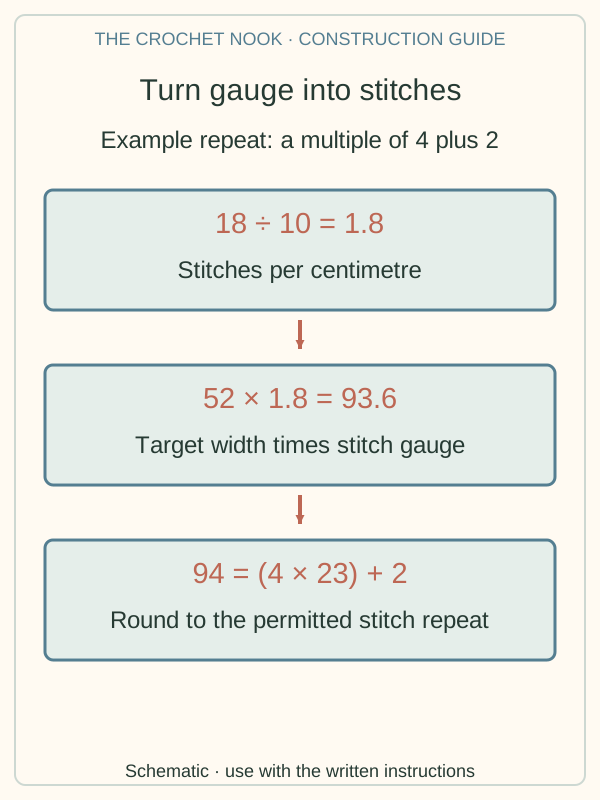
Crochet at least 15 cm in the actual stitch pattern. Wash and dry it as the finished garment will be cared for, then let it rest. Measure across the center 10 cm, count complete stitches, and divide by 10 for stitches per cm. Repeat vertically for rows per cm.
Example: a washed swatch has 18 stitches across 10 cm, so gauge is 1.8 stitches per cm. A 52 cm panel needs 52 × 1.8 = 93.6 stitches. If the repeat is a multiple of 4 plus 2, use 94 stitches because 94 = 4 × 23 + 2.
Convert measurements into pattern numbers
Body width
For a sweater made in two flat panels, divide the desired finished chest circumference by two. Add seam allowance only if the construction requires it.
Body length
Multiply the desired length by rows per cm. If the pattern has hem ribbing, subtract the ribbing depth before calculating the main body rows.
Armhole depth
Measure a comfortable garment from shoulder to underarm. Do not calculate this only from chest size: bodies with the same chest measurement can need different armhole depths.
Sleeve shaping
Subtract cuff width from upper-arm width, convert the difference to stitches, then divide those increases across the available rows. Place increases symmetrically and record every increase row.
Fit checkpoints that prevent rework
- After the hem or first 10 cm, confirm width without stretching.
- Before dividing for armholes, confirm body length and chest width.
- After the first sleeve, pin or baste it in place before making the second.
- Before final seams, block pieces to their planned dimensions and compare matching edges.
Tips & troubleshooting
Stitch gauge matches but row gauge does not
Prioritize stitch gauge for width, then add or remove rows to reach length. For shaped armholes or sleeve caps, recalculate the shaping across your actual row count.
The garment grew after washing
Use the washed swatch, not the fresh swatch, for every calculation. Plant fibers and loose stitches can change noticeably when wet.
I am between pattern sizes
Choose from finished measurements by garment section. You can use one size for the body, a different sleeve length, and adjusted armhole depth as long as joining edges remain compatible.
Frequently Asked Questions
Can I resize a pattern by changing hook size?
Small hook adjustments can refine gauge, but large changes alter drape and fabric quality. Recalculate stitch counts in an appropriate yarn rather than forcing a very different gauge.
How large should a garment swatch be?
At least 15 × 15 cm, and larger for open lace or heavy fabric. Measure the calm center, away from the starting chain and edges.
Related guides
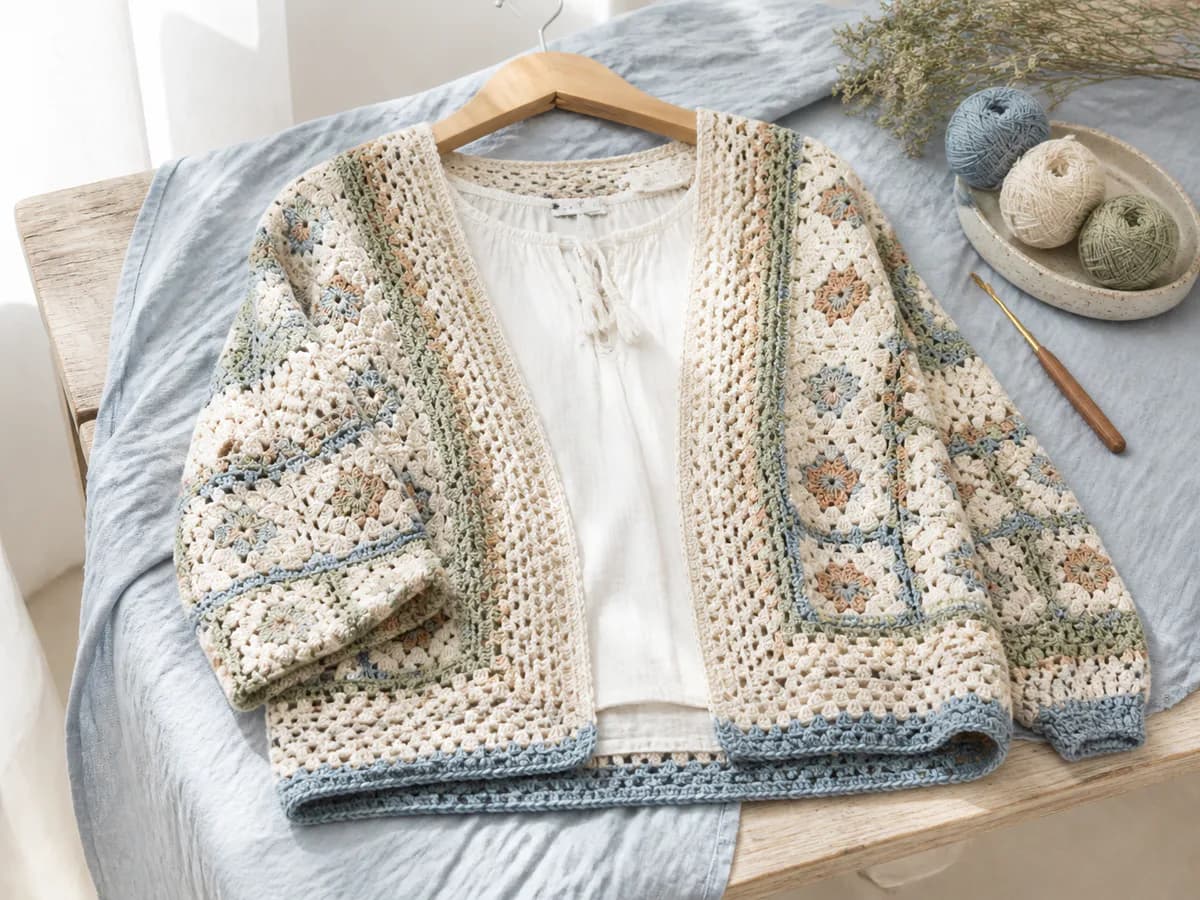
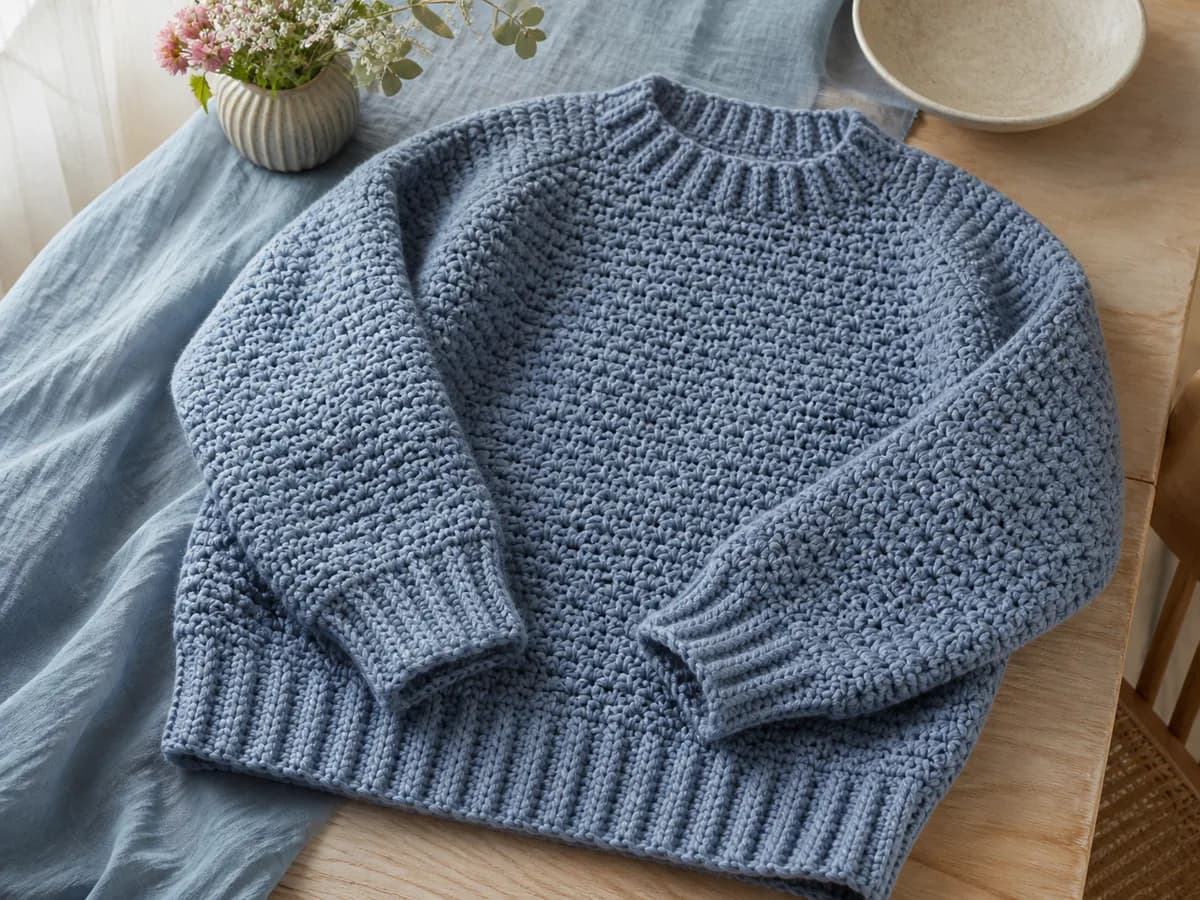
Apply these calculations to a summer crochet top, oversized crochet sweater, or beginner cardigan.
Essential crochet guides
Maker notes
Questions or finished-project notes?
Share what helped, ask about a step, or leave a thoughtful note for the next maker.
Loading maker notes...