Crochet Kits for Beginners: How to Choose Your First Kit
Compare beginner crochet kits for dishcloths, amigurumi, and wearables. Learn what a starter kit should include and choose a first project.

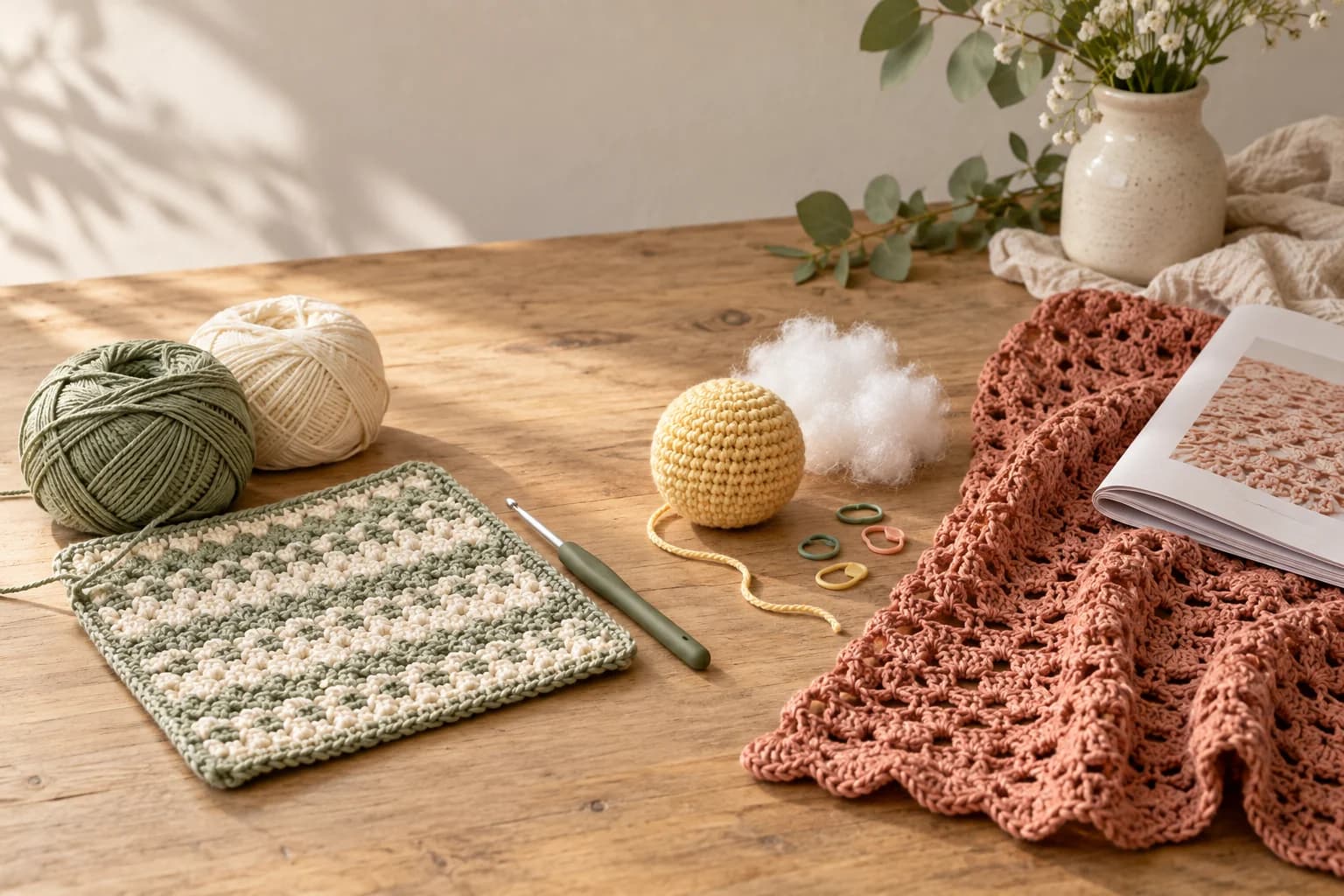
A good beginner crochet kit gives you a project you actually want to finish, the right amount of yarn, a compatible hook, and instructions that explain each new skill. The word beginner on a box is not enough: a dishcloth, a small stuffed animal, and a shawl ask for different kinds of patience. This guide helps you choose between them and spot missing supplies before checkout.
Our quick recommendation: If you have never made a stitch, choose a small flat project with smooth, light-colored yarn and clear photos or video. If a tiny animal is what will keep you motivated, choose a kit that explicitly teaches working in rounds and includes its finishing pieces. Save a full blanket for after you know that you enjoy repeating the same stitches over a larger area.
The named kits below are examples of published kit contents, checked against their makers' listings on October 6, 2026. They are not a hands-on product ranking, and contents, access terms, availability, and prices can change. None of the links are affiliate links.
Which beginner crochet kit fits you?
| Your goal | A useful first kit | Check before buying |
|---|---|---|
| Learn chains and rows with a quick, practical result | Cotton dishcloth or simple square | Does it teach the first stitches and include the hook and enough yarn? |
| Make a cute small project | Explicitly beginner-level amigurumi kit | Are round-by-round instructions, stuffing, eyes or embroidery supplies, and a yarn needle included? |
| Make something wearable | Simple scarf or shawl kit | Are yarn quantities complete, the hook included, and the pattern accessible after purchase? |
| Try crochet without paying for a boxed kit | Your own hook-and-yarn starter bundle | Pick a pattern first, then match its yarn, hook, and yardage. |
There is no universal “best crochet kit for beginners.” Choose the format whose finished object and teaching style suit you. A kit for adults does not need a special hook or yarn because it says adult; the useful distinctions are project complexity, instructions, and the intended recipient of the finished item.
What should a beginner crochet kit include?
Before buying, compare the product listing with this short checklist:
- A clearly named first project and skill level. A photo alone cannot tell you whether the pattern expects you to know increases, color changes, seaming, or assembly. Look for a preview of the required techniques.
- All yarn for the stated size. Check the number of balls and the total yardage or meterage, especially for a blanket or garment. “Yarn included” does not tell you whether it covers every color or your chosen size.
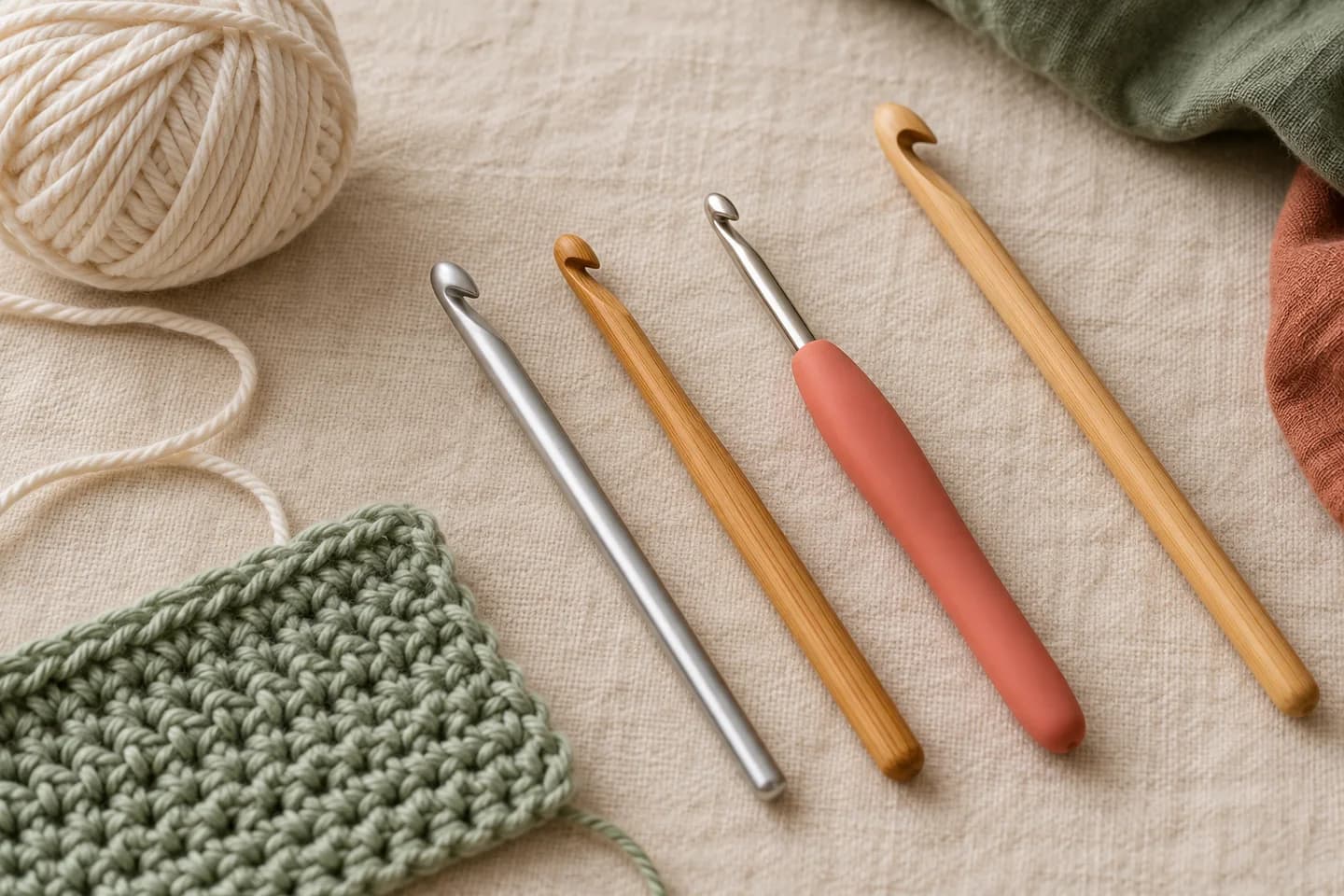
- A hook in a stated millimeter size. Some bundles supply only yarn and a pattern. If no hook is listed, allow for a separate purchase. Our hook-size guide explains the mm markings.
- Instructions you can actually follow. Find out whether you receive printed steps, a downloadable PDF, video, or some combination. Check whether videos demonstrate right- and left-handed techniques if that matters to you, and whether digital access needs a code or account.
- The finishing tools. A yarn needle, stitch markers, and scissors may be useful even for a flat project. Stuffed toys also need stuffing and face details. Check the listing rather than assuming “complete kit” means the same thing to every seller.
- A yarn you can see and handle. Smooth, solid-colored yarn makes the loops easier to identify than a very dark or fluffy yarn. The Craft Yarn Council yarn-weight chart describes yarn categories and starting hook ranges; it does not make every yarn of a given weight feel the same.
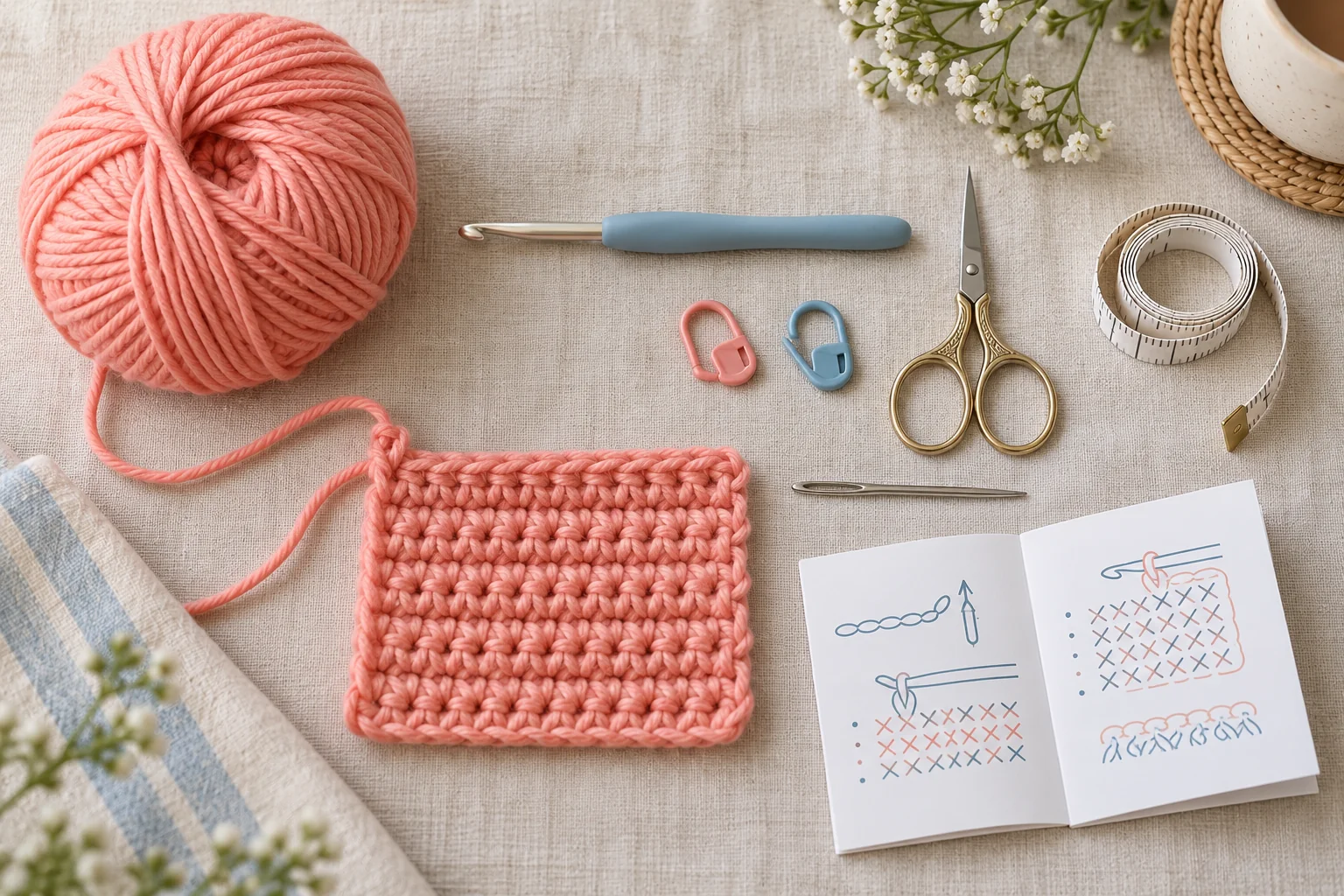
If you only need help choosing the yarn and hook themselves, our first hooks and yarn guide goes deeper without asking you to buy a kit.
Three real kit formats to compare
These examples show how much “beginner kit” can vary. Check each maker's current page before purchasing; the descriptions below reflect the published listings on October 6, 2026.
A flat first project: Crochet.com striped dishcloth kit
The Crochet.com Learn to Crochet Striped Dishcloth kit lists two balls of Dishie cotton yarn, a 4 mm hook, a printed Learn to Crochet book, a tapestry needle, and a cotton project bag. Its listing says the yarn is enough for four dishcloths. The book includes photo tutorials for basic stitches and several beginner patterns.
Why consider it: You can practice rows and see each edge clearly, then make another cloth with the same tools. Check: The listed kit does not include scissors, so have some available. Also confirm the current color and country-specific availability before ordering.
A small stuffed project: The Woobles Pierre the Penguin
The maker's Pierre the Penguin kit listing says it comes pre-started, with yarn, a 4 mm hook, stuffing, plastic eyes, a yarn needle, stitch markers, a downloadable pattern, and step-by-step videos in right- and left-handed versions. The maker marks it beginner level and recommends it for ages 12 and up.
Why consider it: A pre-started piece and close-up videos can make the first round less intimidating for someone motivated by a finished character. Check: Making a stuffed shape still involves counting rounds and finishing details. The plastic eyes are small parts; a toy intended for a child under three needs a different safety assessment. The U.S. Consumer Product Safety Commission's small-parts guidance explains the choking concern. See our amigurumi beginner guide before choosing an animal project.
A larger first project: Hobbii Amarah Shawl kit
The Hobbii Amarah Shawl beginner kit lists four skeins of Bella Coco Merino, a 4 mm hook, darning needles, stitch markers, scissors, and a downloadable shawl pattern. Hobbii says the pattern download link appears on the order confirmation page.
Why consider it: It supplies tools and materials for a wearable result rather than a practice square. Check: A shawl is a longer commitment than a dishcloth, and wool care or sensitivity may matter. Confirm that the color, pattern access, and shipping work for you.
None of these examples is an endorsement based on firsthand testing. Their value is that the seller's contents list lets you compare a flat, stuffed, and wearable first project honestly.
Is a boxed kit worth buying?
It can be worth it when the matching materials and teaching support remove a barrier to starting. The kit price is only part of the decision. Ask what you can use again: the hook, scissors, yarn needle, stitch markers, and instruction book may serve later projects. A small one-project kit can be easier to finish, while a larger bundle may give you more yarn but a greater time commitment.
You can also build a simple beginner kit yourself: pick one absolute-beginner tutorial, buy its specified yarn and hook, and add a yarn needle, two markers, and scissors if needed. This avoids buying a large hook set before you know your grip and preferred project. Compare the total at checkout, including any missing tools and shipping, rather than assuming that a boxed kit or individual supplies must be cheaper.
For a blanket, check the pattern's finished dimensions and required yardage before comparing bundles. “Beginner blanket” describes the stitches, not the amount of yarn or time. A scarf or dishcloth lets you learn the same basic motions on a smaller commitment.
Tips & troubleshooting
Avoid these common kit-buying mistakes:
- Buying a photograph instead of an instruction plan. A finished-object photo is appealing, but first-time makers need steps for the actual techniques used.
- Assuming the hook is included. Search the contents list for a size in millimeters. If it is absent, check the pattern and buy the matching hook separately.
- Choosing hard-to-see yarn for first stitches. Very dark, fuzzy, or heavily textured yarn can hide where the hook should enter. A smooth medium-colored strand often makes learning easier.
- Mixing yarn weights without checking the pattern. A category number is a thickness family, not the number of grams in a ball. Changing yarn can change gauge and finished size.
- Buying an ambitious project only because it says “beginner.” A large blanket may use simple stitches but still take many sessions. Choose the amount of repetition you would enjoy.
- Ignoring who will receive a toy. Eyes or other detachable small parts can be a choking hazard for young children. Review the intended age and construction before giving an amigurumi project as a toy.
Frequently Asked Questions
What is the best crochet kit for a complete beginner?
For learning the mechanics, a small flat project with smooth yarn, a compatible hook, and step-by-step basic-stitch instructions is a forgiving start. If a little plushie is the only project that excites you, choose a kit explicitly marked for first-time crocheters with detailed round-by-round teaching and all finishing materials. “Best” depends on what you will want to finish.
Are amigurumi crochet kits good for beginners?
Some are. Look for explicit teaching of the magic ring or another starting method, increases and decreases, stitch counting, stuffing, and assembly. A pre-started project may help with the first step but will not remove the need to count stitches. Check that the kit really includes the hook and face materials shown in its photograph.
Do beginner crochet kits come with hooks?
Not always. The three maker examples above list hooks, but other kits and yarn bundles may not. Read the current “what's included” section for a hook size in mm, and check whether any pictured tools are only props or optional add-ons.
My beginner kit instructions are too hard. Where should I start?
Find the first technique the pattern assumes you know, such as a slip knot, single crochet, or magic ring. Practice that move with a short length of spare yarn before working the kit project. Our absolute-beginner tutorial shows the first stitches, the pattern-reading guide decodes abbreviations, and the amigurumi beginner guide explains working in rounds. Mark the first stitch and compare each round's count with the pattern. If a paid kit still skips an essential step, ask its maker for the missing instruction rather than guessing at a different starting method.
What if my kit is missing a tool or the video link does not work?
Compare the box with the contents list for the exact kit and option you bought; some sellers offer a version without a hook. If an advertised item is missing, keep the packaging and order details and contact the seller before buying a replacement. For a digital tutorial, check the kit card or order confirmation for its access instructions, then use the maker's support page if the code or link fails. For example, The Woobles help center explains how its customers can reach a tutorial without scanning the QR code and how to report missing items. Other brands use different access methods, so follow the instructions for your own kit.
Should I buy a crochet blanket kit as my first project?
Only if you enjoy a large repeat project and are comfortable checking yardage and gauge. A simple dishcloth or scarf teaches the same foundation with less material and an earlier finish. You can move to a blanket once you know which hook, yarn, and stitch texture you like.
What about a crochet kit for adults or a gift?
Choose by the learner's interests, hand comfort, and preferred format of instruction. If it is a gift, check whether online lessons require a code, account, or internet connection, and make sure any missing scissors or hook are included in the gift. A clear contents list is more useful than age-based marketing alone.
Your next step after choosing a kit
Read the pattern and lay out every listed item before making the first stitch. Then follow our how-to-crochet starter guide for slip knots, chains, and your first rows. If something feels wrong, use the hook-size and gauge guide before replacing your whole kit.
Essential crochet guides
Maker notes
Questions or finished-project notes?
Share what helped, ask about a step, or leave a thoughtful note for the next maker.
Loading maker notes...