Best Yarn and Hooks for Amigurumi: A Buying Guide
A practical amigurumi yarn and hook comparison based on stitch definition, firmness, washability, color visibility, and the size of the finished toy.

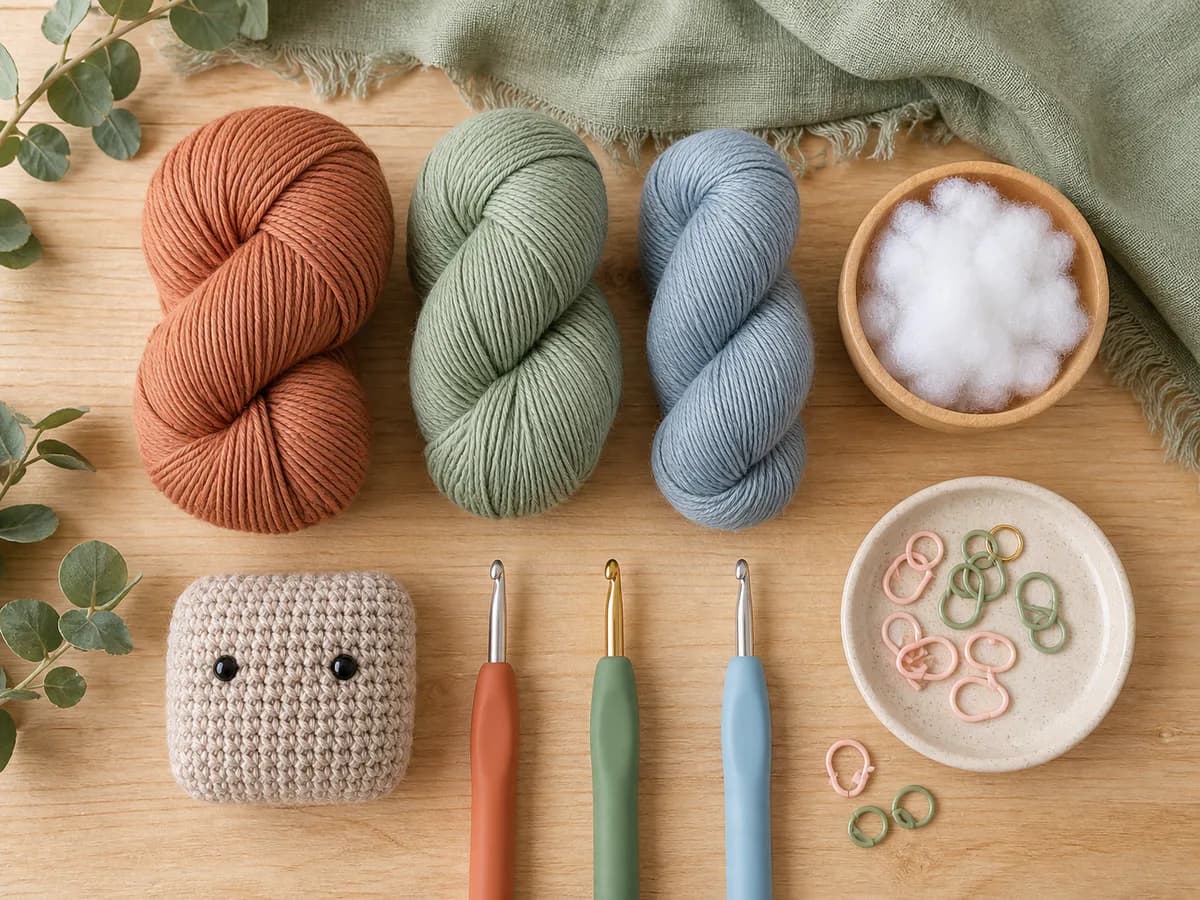
A practical amigurumi yarn and hook comparison based on stitch definition, firmness, washability, color visibility, and the size of the finished toy.
Materials and supplies
- Smooth DK cotton or cotton-blend yarn
- 2.75-3.5 mm hook
- Washable stuffing
- Embroidery yarn
- Stitch marker and yarn needle
- Two or three candidate yarns for side-by-side fabric tests
Crochet terms used
Worked examples in Best Yarn and Hooks for Amigurumi: A Buying Guide use standard US crochet terms: ch, sl st, sc, hdc, dc, inc, dec, st(s), row, and round. The pattern-abbreviation guide expands that notation.
Choose amigurumi yarn by fabric behavior
Cotton and cotton blends
Mercerized cotton gives crisp stitch definition and holds small shapes well, but it has little elasticity and can tire tight-working hands. A cotton-acrylic blend is often easier for a first toy because the fabric remains defined while the yarn bends more comfortably.
Acrylic and wool
Smooth acrylic is economical, washable, and available in many colors; avoid loosely plied acrylic that splits under a small hook. Wool is resilient and shapes smoothly, but check care instructions and the recipient's sensitivities before using it for a washable toy.
Run a gap test
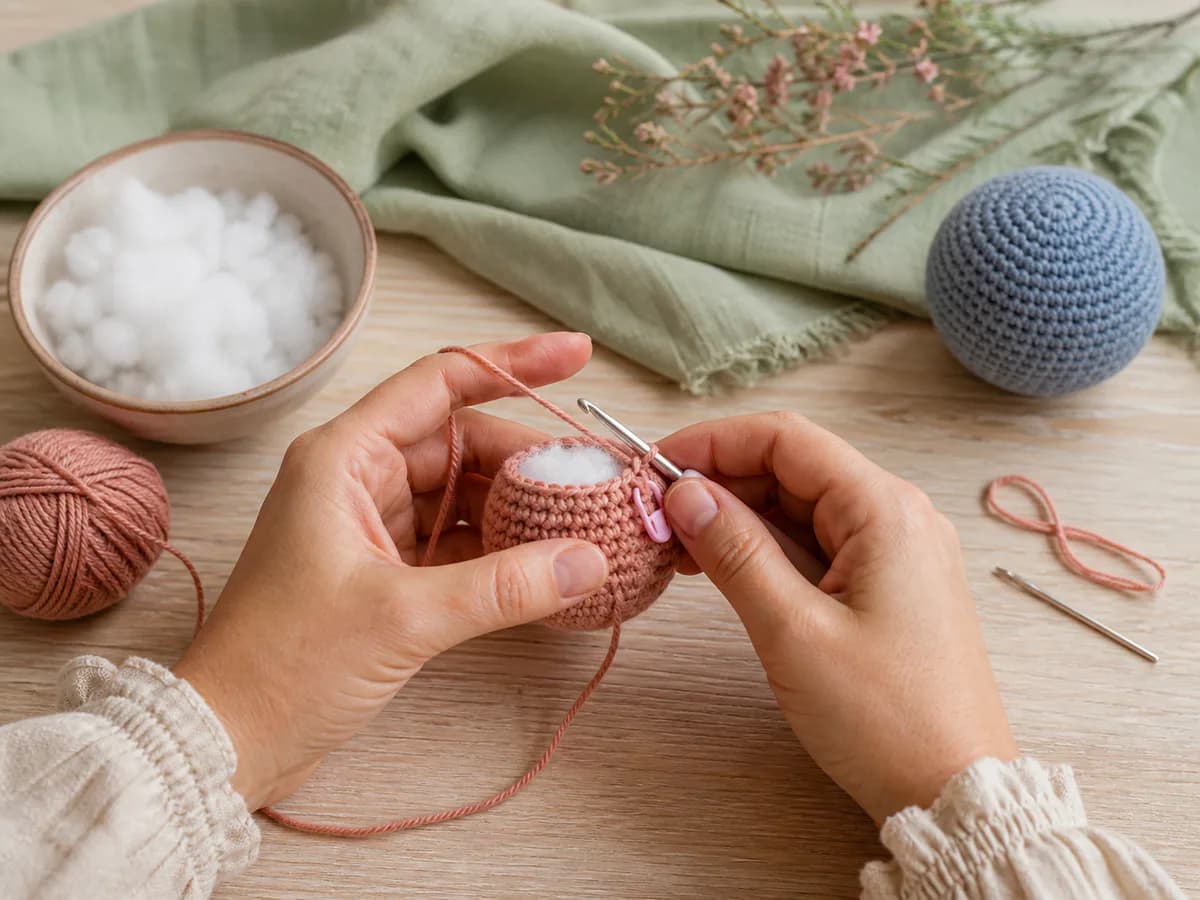
Crochet a flat 24-stitch circle, place white stuffing behind it, and bend the fabric. Choose the largest hook that does not expose stuffing when bent; this produces a firm toy without forcing every stitch.
Match hook style to the project
An inline hook can help keep tight single crochet consistent, while a tapered hook may enter dense stitches more gently. Begin about 0.5-1 mm below the yarn-label suggestion, then let the gap test decide. Record the exact hook because changing only 0.5 mm can noticeably alter a small head.
Buying checklist
Buy one light mid-tone ball before ordering a palette. Confirm that you can see the front loops, the yarn survives frogging, the color does not bleed when damp, and the finished swatch can be washed the way the toy will be cleaned.
Tips & troubleshooting
Test one variable at a time
When applying the advice in Best Yarn and Hooks for Amigurumi: A Buying Guide, change only hook, yarn, tension, or stitch placement before making the next comparison. Several simultaneous changes make it difficult to learn which correction worked.
Keep evidence beside the project
Label swatches and photograph important checkpoints. The recommendations in this guide become more reliable when paired with your measurements and the yarn's care label; keep both beside Best Yarn and Hooks for Amigurumi: A Buying Guide while working.
Stop before forcing a result
If the fabric, fit, or construction from this guide disagrees with your sample, pause at the earliest measurable checkpoint in Best Yarn and Hooks for Amigurumi: A Buying Guide. Undoing a short section is safer than disguising a structural problem at finishing.
Frequently Asked Questions
What skill level should I have?
This guide is planned for a confident beginner crocheter. Practice any unfamiliar stitch separately and read the complete construction in Best Yarn and Hooks for Amigurumi: A Buying Guide before beginning.
Can I change the yarn or hook?
Compare candidate hooks using the same yarn and a small sc sample. Inspect stitch visibility, hand comfort and gaps when the fabric is lightly filled; hook labels alone do not predict a firm amigurumi fabric.
May I sell the finished item?
Small-scale sales of finished items from this guide are allowed with credit to Best Yarn and Hooks for Amigurumi: A Buying Guide. Do not copy, sell, or republish the written instructions or site images.
Keep exploring
To build on Best Yarn and Hooks for Amigurumi: A Buying Guide, continue with 15 Small Amigurumi Keychain Ideas, 12 Beginner Amigurumi Project Ideas, Best Free Amigurumi Patterns and Beginner Guides. For a broader route through the site, use the Ultimate Free Crochet Pattern Library.
Essential crochet guides
Maker notes
Questions or finished-project notes?
Share what helped, ask about a step, or leave a thoughtful note for the next maker.
Loading maker notes...