Crochet Toy Safety Guide and Beginner Pattern
Learn safer material choices, embroidered features, secure joins, inspection steps, and a simple beginner shape for handmade crochet toys.

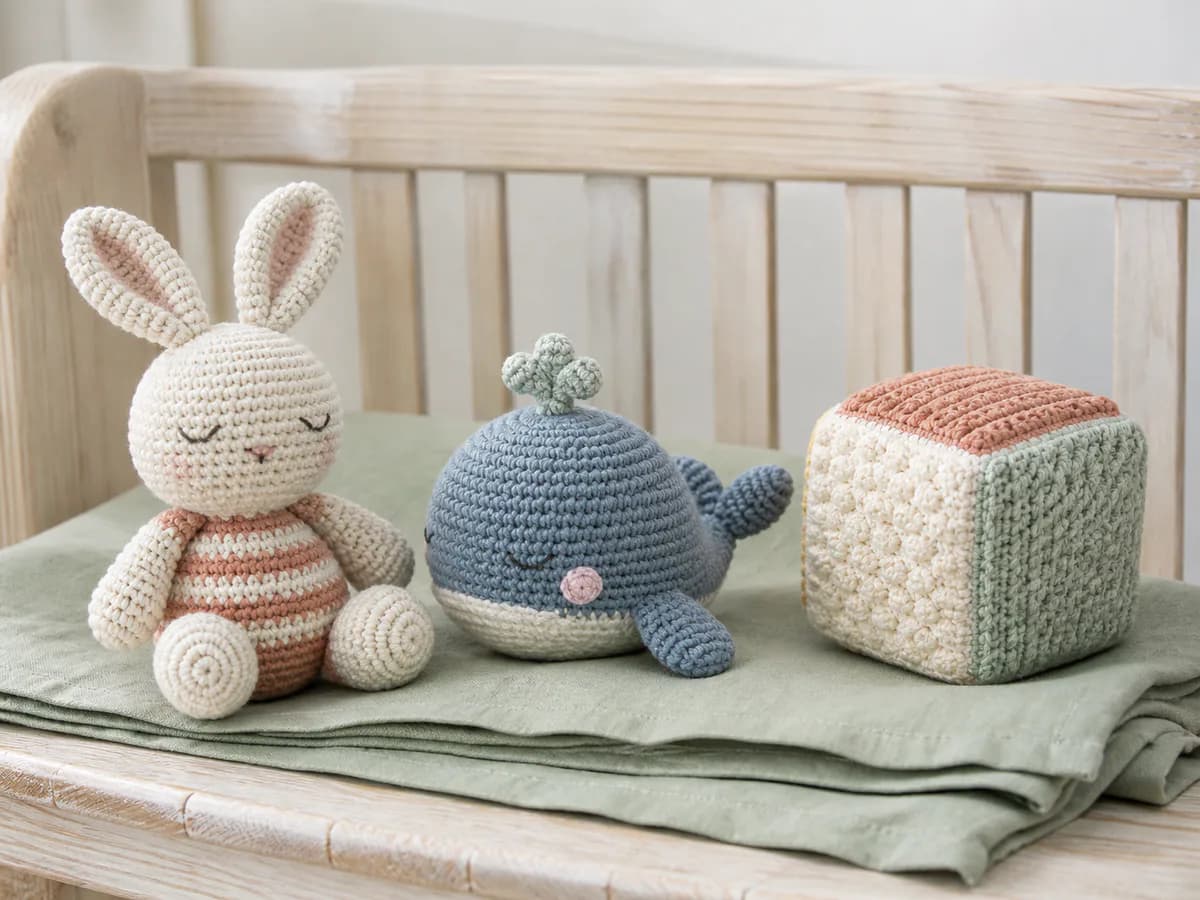
No handmade toy can be declared safe from a pattern alone. Safety depends on materials, construction, the child's age, supervision, wear, and the product rules where the toy is given or sold. This guide is a practical risk-reduction checklist for crocheters, not a certification.
For children under three: prefer embroidered features, avoid buttons and beads, secure every seam through multiple stitches, keep cords and loops short, and inspect the toy before every use.
Choose washable, traceable materials
- Smooth machine-washable yarn with a retained label
- Washable new polyester stuffing
- A hook small enough to prevent stuffing gaps
- Strong matching yarn for assembly
- Colorfast embroidery floss for facial details
Avoid wire, glued decorations, scented filling, loose sequins, long hair loops, and embellishments that can detach. “Safety eyes” is a product name, not a guarantee that the part is suitable for every age or fabric.
Construction checklist
Keep the fabric dense
Make a small stuffed test sphere and squeeze it. If filling fibers emerge or gaps open, use a smaller hook or thicker yarn. Do not solve gaps by over-tightening until the fabric becomes difficult to work.
Embroider the face securely
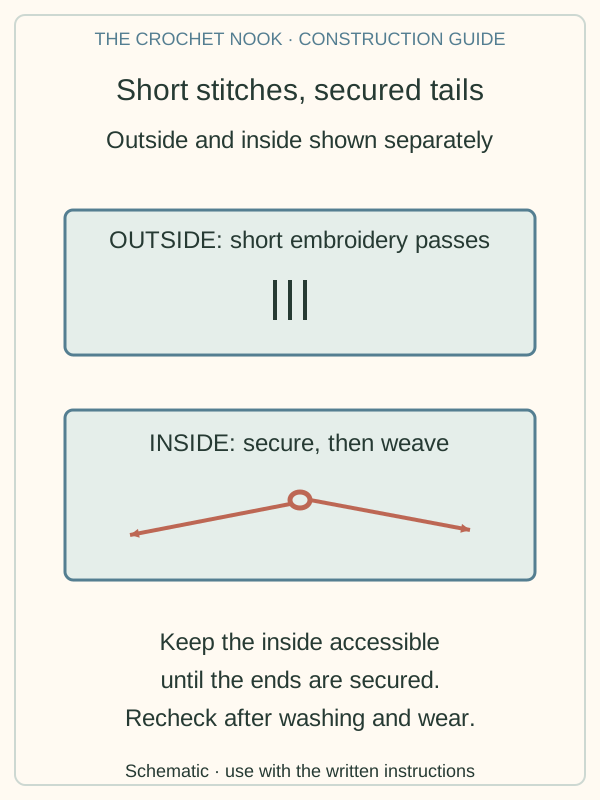
Use multiple short stitches rather than one long exposed strand. Knot yarn tails inside before final stuffing, then route the tails in different directions through dense fabric.
Attach parts through full stitches
Pin each piece, sew around it twice if construction allows, and tug firmly in several directions. Ears and limbs should not depend on a single strand or surface loop.
Control shape and stuffing
Add small tufts and keep the toy soft enough to compress. Hard overstuffing strains seams. Do not include pellets, dried grains, foam scraps, or reused filling in a baby toy.
A low-risk first design
A single-piece ball or rounded animal with embroidered details has fewer attachment points than a figure with separate limbs. This example uses US terms and continuous rounds: Round 1: 6 sc in a magic ring. (6) Round 2: Inc around. (12) Round 3: Repeat (sc, inc) 6 times. (18) Round 4: Repeat (2 sc, inc) 6 times. (24) Round 5: Repeat (3 sc, inc) 6 times. (30) Rounds 6-12: Sc around. (30) Round 13: Repeat (3 sc, invisible dec) 6 times. (24) Round 14: Repeat (2 sc, invisible dec) 6 times. (18) Embroider a minimal face, knot the tails inside, and stuff. Round 15: Repeat (sc, invisible dec) 6 times. (12) Round 16: Invisible dec 6 times and close through the remaining front loops. (6) Add only shallow embroidered ears or markings, not separate appendages. For a step-by-step explanation of the same shaping logic, see the complete amigurumi beginner guide.
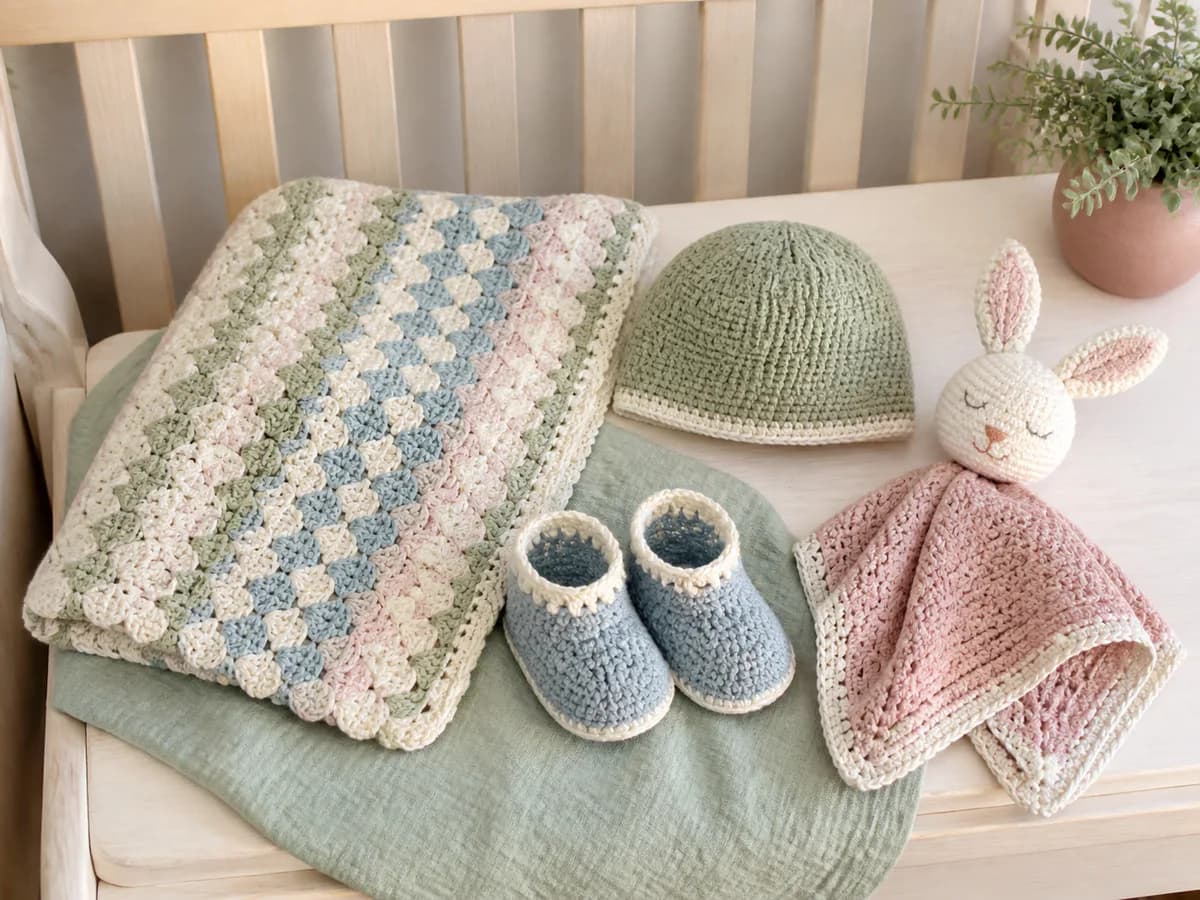
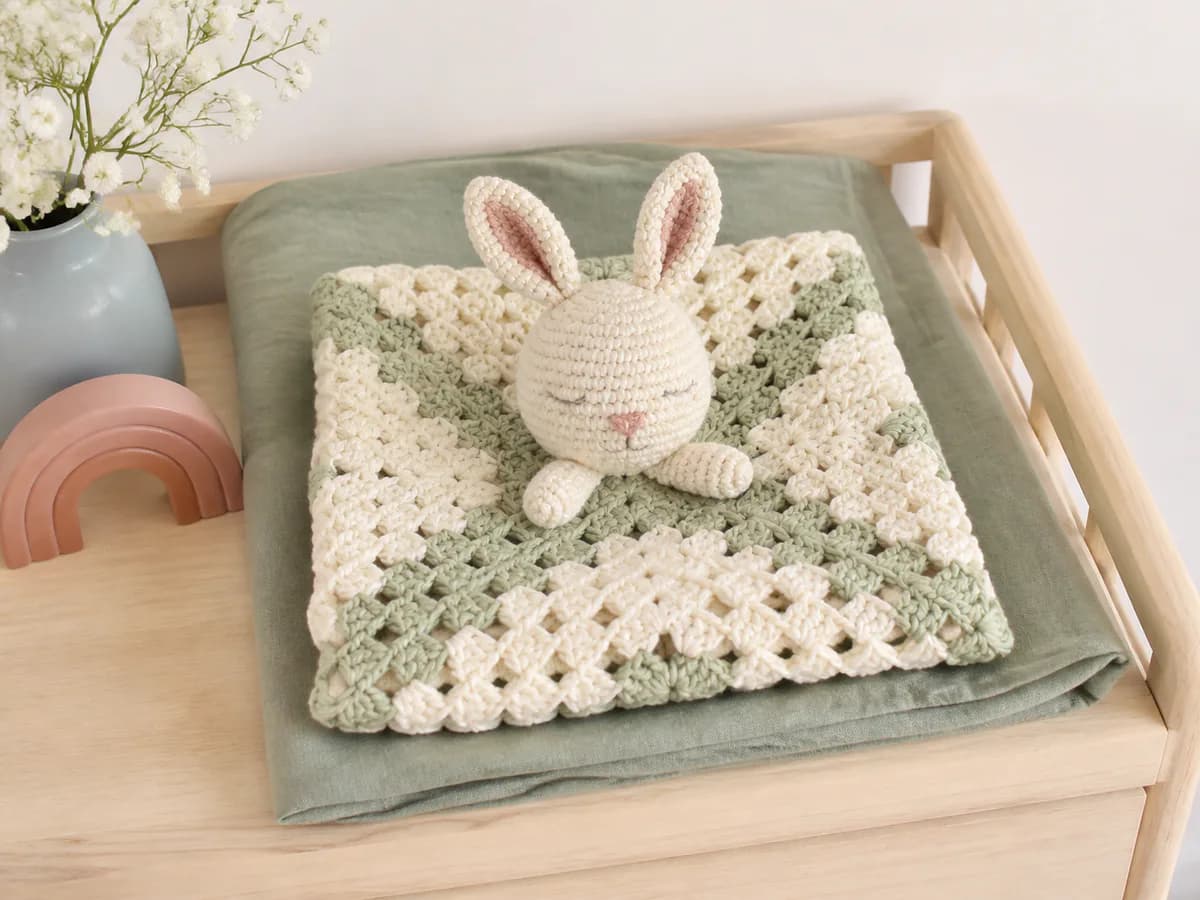
For a lovey, keep the blanket section compact and attach the head through a broad base with repeated passes. Toys, loveys, and blankets do not belong in an unsupervised infant sleep space. Review current guidance from your national health and product-safety authorities.
Before gifting or selling
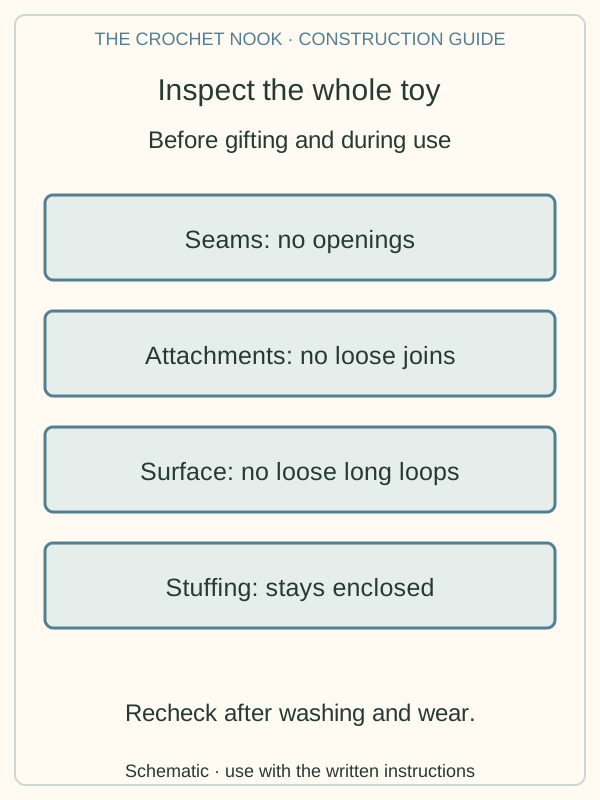
- Record the yarn, stuffing, pattern version, and completion date.
- Wash the finished item as the recipient will wash it.
- Pull-test seams and embroidery after washing.
- Trim or reweave any emerging ends.
- Give written care and inspection instructions.
- For sales, follow the toy-testing, labeling, and record requirements in the buyer's jurisdiction.
Three toy sizes from one original shape
Scale a simple original toy by changing yarn and hook together instead of altering individual shaping rounds. Keep the fabric firm enough that stuffing does not show.
| Version | Suggested finished height | Best use |
|---|---|---|
| Small | 10-12 cm | Supervised play; embroider every feature |
| Medium | 16-20 cm | Huggable gift with reinforced seams |
| Large | 25-30 cm | Display or supervised play; check stuffing support |
Size does not make attached parts safer. Embroider details for children under three, avoid long loops and detachable decorations, and inspect the complete toy regularly.
Tips & troubleshooting
A yarn tail is working free
Do not cut it at the surface. Thread it onto a needle, weave it through dense stitches in several directions, then draw the end inside the toy.
Stuffing appears after washing
Stop use and repair or retire the toy. Future versions need denser fabric, less stuffing pressure, or a tightly woven internal lining designed for the purpose.
An attached part feels loose
Remove and reattach it rather than adding a few surface stitches. Inspect the surrounding fabric for stretching before sewing through undamaged full stitches.
Frequently Asked Questions
Are plastic safety eyes suitable for babies?
For baby gifts, embroidered eyes remove a detachable plastic component and are the more conservative choice. Always consider the entire construction and local requirements.
How often should a crochet toy be inspected?
Before each use for an infant or toddler, and again after washing. Look for loose threads, open seams, exposed filling, stretched loops, or damaged embellishments.
Related guides
Review baby lovey construction, compare newborn photo prop patterns, or make a washable baby blanket.
Essential crochet guides
Maker notes
Questions or finished-project notes?
Share what helped, ask about a step, or leave a thoughtful note for the next maker.
Loading maker notes...